

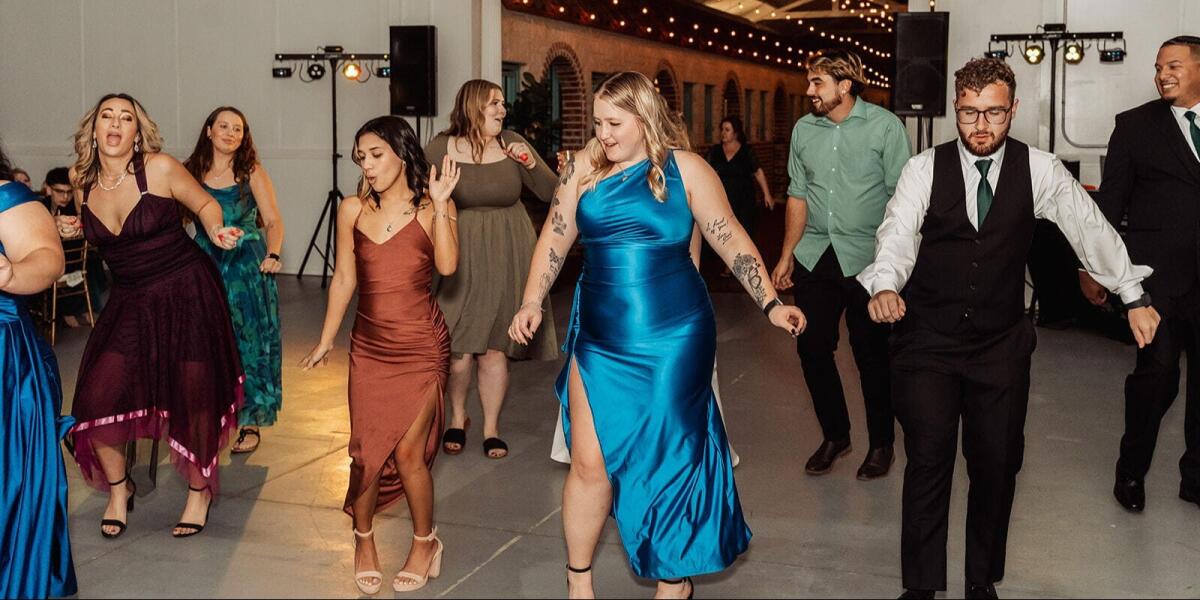
The After-Party Playbook: Utilizing the Movable Stage and Premium Lighting for an Epic Reception
Posted By The Dream Ranch Events On 2026-08-24
How to Transform Your Wedding Reception Into an Epic Celebration
A beautiful wedding reception doesn't have to end when dinner is served and the formalities are complete.
In fact, for many modern couples, that's when the real party begins.
The transition from an elegant dinner reception to a high-energy after-party can completely change the atmosphere of your wedding. The room gets darker. The music gets louder. The dance floor becomes the center of attention. Lighting shifts from warm and romantic to dynamic and energetic. And suddenly, the same reception space feels like an entirely different venue.
The secret isn't simply turning up the music.
It's creating a deliberate production transition using staging, lighting, layout, entertainment, and timing.
For couples planning a premium wedding at The Dream Ranch Events, this transformation can be especially effective because the venue offers flexible event spaces and an industrial-grade 12×24-foot movable stage that can be incorporated into different reception configurations.
This playbook explains how to use that flexibility to create an after-party that feels polished, energetic, and memorable—without making the transition feel chaotic.
What Makes an After-Party Feel Different From a Reception?
A reception and an after-party can happen in the same room, but they shouldn't necessarily feel like the same event.
Think of the reception as the polished chapter of the evening.
The after-party is the chapter where everyone lets loose.
The reception typically emphasizes:
- Dinner and conversation
- Formal introductions
- Toasts and speeches
- First dances
- Elegant décor
- Warm ambient lighting
- Family photographs
- Structured entertainment
The after-party emphasizes:
- Dancing
- DJ or live entertainment
- High-energy music
- Dynamic lighting
- Guest interaction
- Performances
- Visual effects
- A more relaxed atmosphere
The goal isn't to completely redesign the venue.
It's to reset the experience.
And three elements have an outsized impact on that reset:
Stage + Lighting + Floor Plan
Step 1: Design the Reception With the After-Party in Mind
One of the biggest production mistakes is planning the reception and after-party as two completely separate events.
Instead, design the reception layout with the eventual transformation already in mind.
A movable stage makes this significantly easier.
Dream Ranch's indoor Elegance space includes a 12×24 ft foldable/movable stage, which can be positioned according to the event setup. The venue also provides round and rectangular tables, allowing planners to create different seating and entertainment configurations.
A practical reception layout
During dinner:
Stage → Head table / entertainment / speeches
Center → Dining tables
Front or side → Dance floor
As dinner ends, the production team can transition the focus toward:
Stage → DJ / band / performers
Center → Expanded dance floor
Perimeter → Cocktail tables / standing space
This creates a natural visual shift without requiring guests to leave the room.
Pro tip
Don't put so much furniture around the dance floor that removing it becomes a major production operation.
Your after-party layout should be planned before the first guest arrives.
Step 2: Use the Movable Stage as the Entertainment Anchor
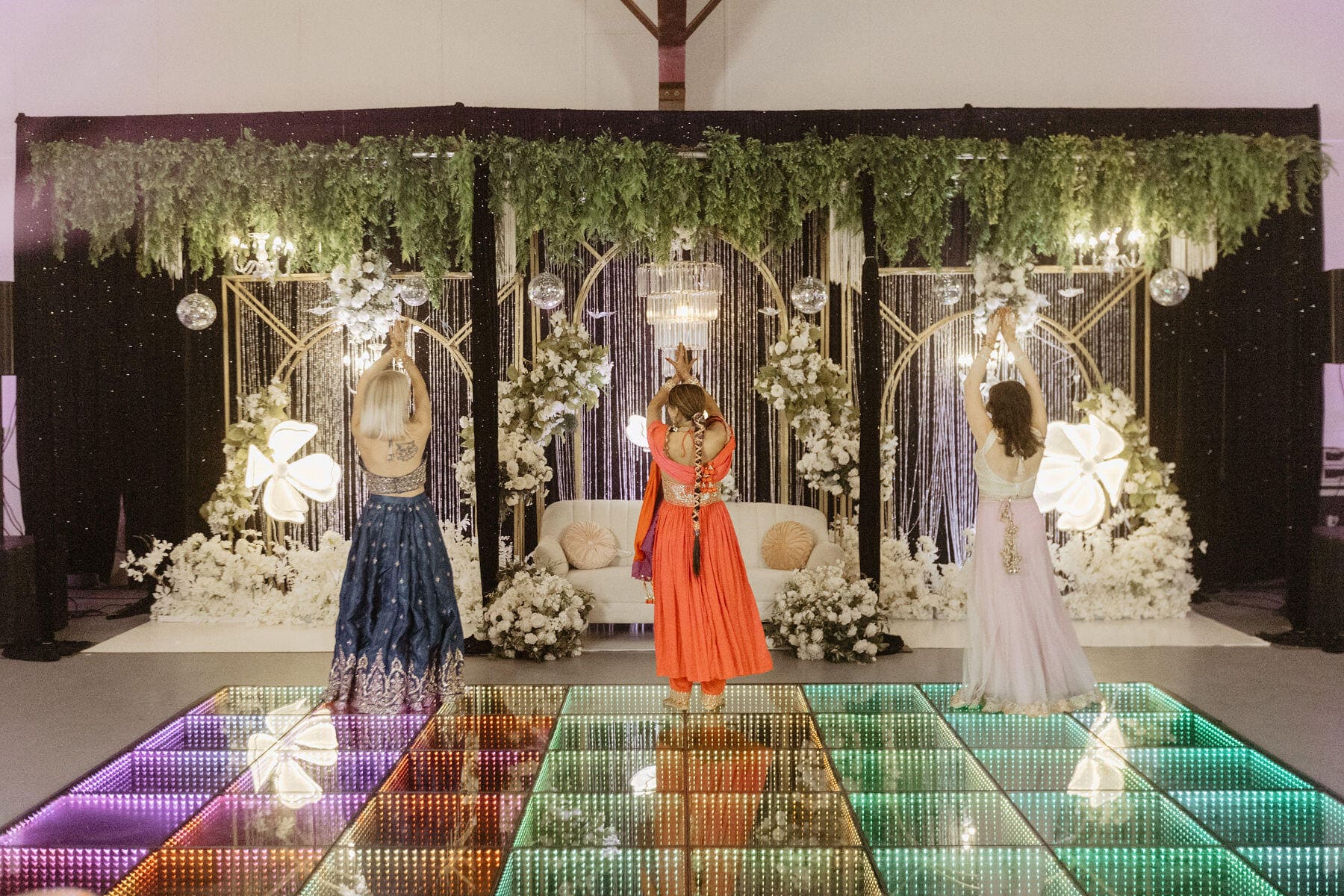
A stage isn't simply a platform.
In an after-party environment, it becomes the visual and energy center of the room.
A properly positioned stage gives guests a clear focal point for:
- DJs
- Live bands
- Dancers
- Wedding-party performances
- Special guest appearances
- Cultural performances
- MCs
- Couple entrances
- Late-night entertainment
At Dream Ranch, the 12×24-foot movable stage provides substantial flexibility for indoor reception configurations. The venue also notes that stage skirting and stage cloth can be included upon request.
Stage placement idea #1: Stage facing the dance floor
This is the classic party configuration.
Best for:
- DJ-led receptions
- Live bands
- Large dance floors
- High-energy wedding parties
The audience naturally faces the stage, while lighting beams can extend from behind or above the entertainment area toward the dance floor.
Stage placement idea #2: Stage along the room's long axis
For larger receptions, orienting the stage along the longest visual axis can make the room feel deeper and more intentional.
This can work particularly well when the guest count is substantial and you want guests seated farther from the stage to maintain good visibility.
Stage placement idea #3: Stage + expanded dance floor
If dancing is the priority, reduce the amount of furniture between the stage and guests.
Create a broad visual corridor:
STAGE → DANCE FLOOR → GUEST AREA
This configuration encourages guests to move toward the entertainment instead of remaining seated.
Step 3: Create a Lighting "Before and After"
If there is one production element capable of making the reception-to-after-party transition feel dramatic, it's lighting.
During dinner, your lighting should support conversation, photography, food presentation, and décor.
During the after-party, lighting should support movement and energy.
Reception lighting
Think:
- Warm white
- Soft amber
- Subtle uplighting
- Table illumination
- Architectural lighting
- Gentle accent lighting
After-party lighting
Think:
- Saturated colors
- Moving beams
- Dynamic patterns
- Pulsing effects
- Stage lighting
- Dance-floor illumination
- DJ booth lighting
The contrast is what creates the "wow."
You don't necessarily need to turn every light off.
Instead, change the lighting language.
Step 4: Upgrade From Basic Uplighting to Intelligent Lighting
Basic uplighting can make a venue look beautiful.
Premium lighting can make the room move.
For couples looking for a more elevated after-party experience, consider discussing these fixtures with your lighting designer or production company.
Moving-head fixtures
Moving heads can sweep beams across the room, illuminate performers, and create motion above the dance floor.
They are particularly effective when synchronized with musical transitions.
LED wash fixtures
These provide broad, adjustable color coverage.
Use them to:
- Change wall colors
- Highlight architectural features
- Create different moods
- Coordinate lighting with wedding colors
Beam fixtures
Narrow beams create a more dramatic nightclub-style effect.
They work especially well in darker rooms where the beams become visually visible.
Stage lighting
The stage itself should receive enough illumination for performers and photography without making the entire room feel flat.
Pixel or programmable lighting
For a truly premium production, programmable fixtures can create coordinated color changes, patterns, and transitions.
Step 5: Build the Lighting Transition Into the Timeline
Don't wait until the DJ starts playing dance music to think about lighting.
The transition should be scripted.
Here's an example timeline.
7:00 PM — Dinner
Lighting:
Warm + elegant
Music:
Low-volume background
Objective:
Keep the room comfortable and conversational.
8:00 PM — Toasts & Formalities
Lighting:
Warm spotlighting + stage illumination
Objective:
Direct attention toward the speaker or couple.
8:30 PM — First Dance
Lighting:
Soft spotlight + subtle ambient lighting
Objective:
Create intimacy and keep photography flattering.
8:45 PM — Family/Wedding Party Dances
Lighting:
Slightly brighter + warmer
Objective:
Gradually increase energy.
9:00 PM — Reception-to-Party Transition
This is the critical moment.
The DJ or MC announces the transition.
Then:
Dinner lighting fades.
Dance-floor lighting comes alive.
Stage lighting intensifies.
Color palette changes.
Music tempo increases.
The room should feel noticeably different within seconds.
9:05 PM — Full After-Party Mode
Now the production system is operating at full energy.
Use:
- Moving lights
- Color changes
- Beam effects
- Stage lighting
- DJ booth lighting
- Dance-floor effects
The goal is simple:
Make guests want to get up.
Step 6: Give Your DJ and Lighting Designer the Same Cue Sheet
One of the easiest ways to make an event feel professionally produced is to coordinate the DJ and lighting team.
Don't treat them as separate vendors.
Give them a shared timeline.
For example:
Moment | Music Cue | Lighting Cue |
Couple entrance | High-energy track | Bright stage wash |
First dance | Slow track | Soft spotlight |
Dinner | Background music | Warm ambient |
Party announcement | Music rises | Lights begin changing |
Dance-floor opening | Beat drops | Full dance lighting |
Special performance | Track begins | Stage-focused lighting |
Final song | Signature track | Full-room effect |
This small amount of coordination can make a huge difference.
Step 7: Make the Dance Floor the Hero
A common mistake is putting all the production equipment on the stage and forgetting about the guests.
The dance floor is where the after-party actually happens.
Your lighting should make that area feel inviting.
Consider:
- Overhead moving lights
- Side washes
- Stage backlighting
- Architectural uplighting
- DJ booth lighting
- Low-level perimeter lighting
Avoid pointing extremely bright fixtures directly into guests' eyes.
Premium lighting isn't about more brightness.
It's about better control.
Step 8: Use Lighting to Create Instagram-Worthy Moments
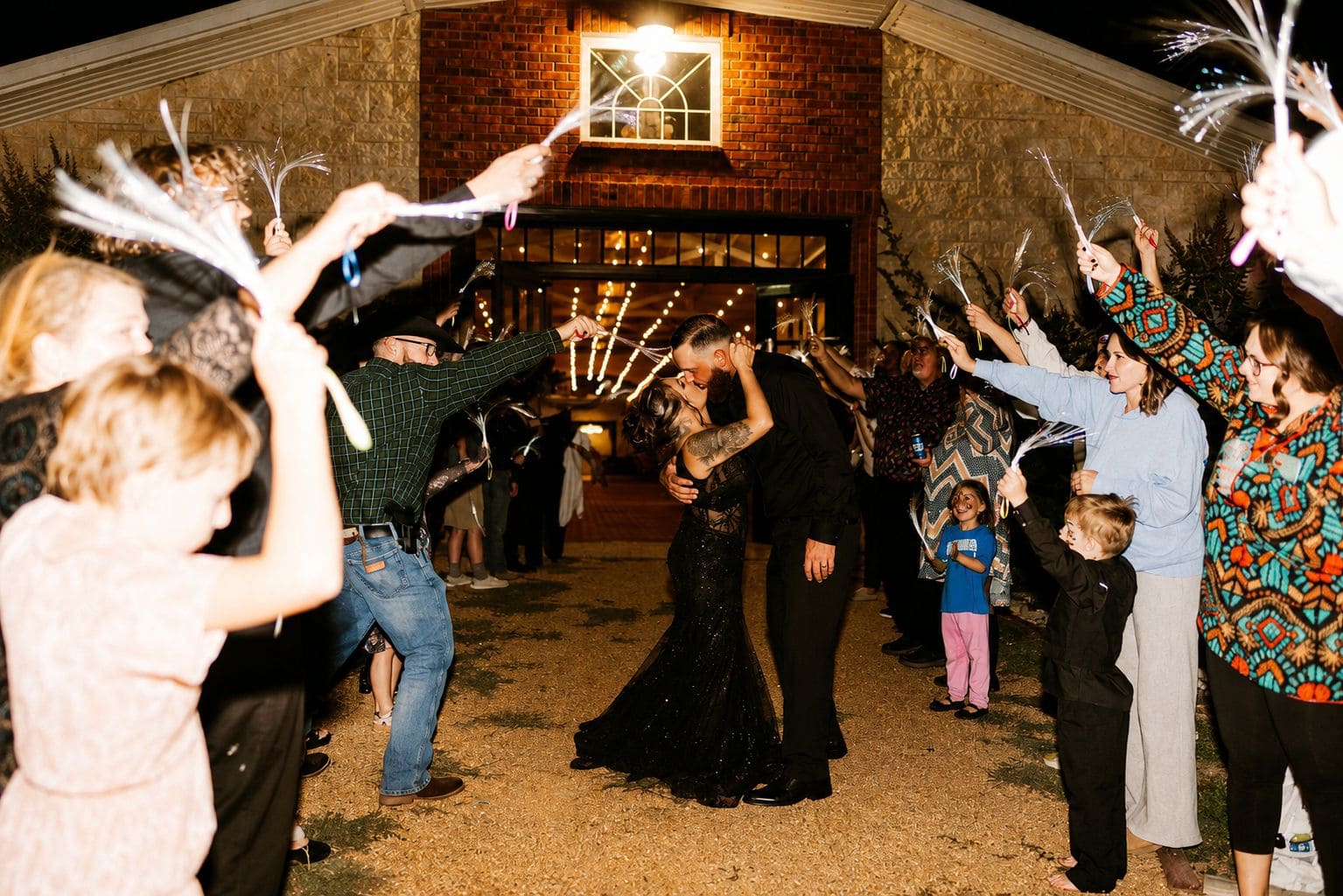
Today's wedding after-party is also a visual experience.
Guests will photograph and record:
- Couple entrances
- Dance-floor moments
- DJ performances
- Wedding-party dances
- Confetti moments
- First dances
- Special performances
That means lighting should be considered part of the photography strategy.
Create at least three "hero moments."
For example:
Hero Moment 1 — The After-Party Reveal
The room changes from warm reception lighting to vibrant party lighting.
Hero Moment 2 — Couple Returns to the Dance Floor
The couple enters under a coordinated stage-and-floor lighting sequence.
Hero Moment 3 — Late-Night Performance
The stage becomes the focal point while the dance floor remains visually active.
These moments give photographers and guests something dramatic to capture.
Step 9: Don't Forget Guest Comfort
A spectacular lighting package should never come at the expense of comfort.
Pay attention to:
Temperature
Large crowds dancing can quickly make an indoor room feel warmer.
Visibility
Keep pathways, exits, and important guest areas appropriately illuminated.
Sound
Coordinate DJ and venue requirements before selecting equipment.
Cables
Cable management should be planned before guests arrive.
Vendor access
Your lighting and staging team needs enough time to load in, test equipment, and safely remove equipment after the event.
Dream Ranch specifically requires outside vendors to coordinate around setup protocols and safety requirements, and the venue has an open-vendor policy subject to insurance and other requirements.
Step 10: Plan for the Venue's Real-World Rules
A beautiful production concept still needs to work within the venue.
This is especially important for outdoor receptions and after-parties.
At Dream Ranch, amplified music is permitted in the indoor hall as long as it does not disturb neighbors, while outdoor sound must be turned off at 9:00 PM. The venue also specifies requirements concerning DJ equipment, including restrictions on subwoofers and floor tape.
That makes the indoor Elegance hall particularly important when planning a late-night, high-energy after-party.
Ask your production team:
- Where can equipment be positioned?
- Where can power be accessed?
- How will cables be secured?
- What is the venue's sound policy?
- What time can vendors load in?
- How much time is needed for lighting programming?
- Can the stage be repositioned?
- What equipment requires additional power?
- What happens if the outdoor portion runs late?
The earlier these questions are answered, the smoother the event becomes.
Premium Lighting Package: What Should You Actually Pay For?
Premium doesn't mean buying every lighting effect available.
Instead, spend money on the equipment that creates the biggest visual difference.
For a premium wedding after-party, prioritize:
Tier 1 — Foundation
- Professional DJ
- Quality sound system
- Stage lighting
- Basic architectural uplighting
- Dance-floor illumination
Tier 2 — Enhanced Production
Add:
- Moving-head fixtures
- Beam fixtures
- Programmable color scenes
- DJ booth lighting
- Additional stage lighting
Tier 3 — Full Production Experience
Consider:
- Advanced lighting programming
- Large-scale stage design
- Video walls or LED displays
- Intelligent lighting synchronization
- Special effects
- Coordinated entertainment cues
For many weddings, Tier 2 provides the sweet spot between cost and visual impact.
Movable Stage vs. Fixed Stage: Which Is Better?
A fixed stage can work well when the venue layout is permanent.
But movable staging provides something valuable:
Flexibility.
Feature | Fixed Stage | Movable Stage |
Layout flexibility | Limited | High |
Reception reconfiguration | Difficult | Easier |
DJ positioning | Fixed | Flexible |
Performance layouts | Limited | Adaptable |
Dance-floor optimization | Moderate | High |
Multi-event use | Moderate | High |
For weddings where the room needs to evolve throughout the evening, movable staging is particularly useful.
Dream Ranch's 12×24 ft movable stage is an example of this type of flexibility.
A Sample 200-Guest After-Party Layout
Imagine a 200-guest wedding reception.
During dinner:
[ STAGE ]
DJ/MC + speeches
↓
[ DANCE FLOOR ]
↓
[ ROUND TABLES ]
↓
[ BAR / SOCIAL AREA ]
As dinner ends:
- Select tables are cleared or repositioned.
- The dance floor expands.
- The DJ becomes the visual focal point.
- Lighting transitions from warm to dynamic.
- The stage receives stronger illumination.
- Guests naturally move toward the entertainment.
Dream Ranch even provides sample floor plans that demonstrate configurations for different guest counts, including layouts incorporating a stage and dance floor.
How Much Should You Budget for Premium Lighting and Staging?
Wedding production pricing varies considerably based on location, guest count, equipment, labor, programming, venue requirements, setup time, and production complexity.
As a planning framework, couples may encounter packages ranging from roughly $1,000 to $5,000+ for meaningful staging and lighting upgrades, with larger productions potentially exceeding that range.
Instead of choosing a package based purely on price, ask:
What changes will my guests actually see?
A $1,500 upgrade that dramatically transforms the room can deliver more value than a $4,000 package filled with effects guests barely notice.
Ask vendors for an itemized proposal covering:
- Stage
- Stage skirting
- DJ booth
- Moving lights
- Uplighting
- Dance-floor lighting
- Special effects
- Setup labor
- Breakdown labor
- Lighting programming
- Power requirements
- Transportation
- On-site technician
This makes comparing proposals much easier.
The After-Party Vendor Checklist
Before signing with a staging or lighting company, ask these questions:
- Have you produced wedding after-parties similar to ours?
- Can you provide photos or videos of previous setups?
- How many moving lights are included?
- Are lighting scenes programmed in advance?
- Will a technician be present during the event?
- How much setup time do you need?
- Can the stage layout be changed?
- How will cables be secured?
- What are the power requirements?
- Do you carry liability insurance?
- Have you worked at our venue before?
- Are your equipment dimensions compatible with the venue?
- Can you coordinate directly with our DJ?
- What happens if equipment fails?
- Are setup and breakdown included in the quoted price?
The best production vendors won't simply sell you equipment.
They'll help you design an experience.
Common After-Party Mistakes to Avoid
1. Too Much Lighting
More fixtures don't automatically create a better atmosphere.
Too many competing effects can make the room look chaotic.
Better approach: Choose a few lighting effects and coordinate them.
2. No Transition Plan
If the lights simply change randomly when the DJ starts dancing music, the transformation can feel accidental.
Better approach: Create a specific transition cue.
3. Blocking the Dance Floor
A beautiful stage setup means very little if guests don't have enough room to dance.
Better approach: Protect your dance-floor footprint first.
4. Ignoring Photography
Extremely dark rooms can produce disappointing photos.
Better approach: Work with your photographer and lighting designer to maintain flattering illumination.
5. Forgetting Load-In Time
Lighting and staging aren't plug-and-play.
Better approach: Build installation, programming, sound check, and safety inspection into the production timeline.
6. Treating the DJ and Lighting Team Separately
Music and lighting should tell the same story.
Better approach: Give both teams a shared event timeline.
The Dream Ranch Advantage: Designing a Reception That Can Evolve
The best wedding venues aren't simply beautiful when guests arrive.
They're flexible enough to support the different chapters of the celebration.
The Dream Ranch offers a 36-acre property with multiple event spaces, including the Elegance indoor hall, The Avenue, The Grove, Unwind, and Sunshine. The property can accommodate events ranging from intimate celebrations to weddings with up to 250 guests, depending on the space.
For larger receptions, the Elegance hall offers a substantial indoor environment with flexible seating, a permanent bar, and the 12×24 ft movable stage.
That combination gives couples and planners an important advantage:
The room can be designed around the celebration instead of forcing the celebration into a rigid layout.
And when the goal is a reception that evolves into a memorable late-night party, that flexibility matters.
Your Ultimate Reception-to-After-Party Formula
If you want a simple formula to remember, use this:
1. Start elegant.
Warm lighting. Comfortable seating. Beautiful décor.
2. Build anticipation.
Gradually increase music energy and visual activity.
3. Reset the room.
Move or remove unnecessary furniture.
4. Activate the stage.
Turn the entertainment area into the visual focal point.
5. Transform the lighting.
Switch from warm ambient scenes to dynamic colors and movement.
6. Open the dance floor.
Make it visually and physically inviting.
7. Coordinate every cue.
DJ + MC + lighting + entertainment should work from one timeline.
8. Save something for the end.
A signature final song, couple moment, performance, or lighting sequence gives the night a memorable finish.
Final Takeaway
An unforgettable wedding after-party isn't created by simply adding louder music and colorful lights.
It's created through intentional production design.
The movable stage establishes the entertainment focal point.
Premium lighting changes the emotional character of the room.
A smart floor plan keeps guests moving.
And carefully timed transitions turn a formal reception into an entirely different experience.
For couples planning a celebration at The Dream Ranch, the venue's flexible spaces and movable staging provide a strong foundation for this kind of transformation.
The real objective is simple:
Dinner should feel elegant.
The reception should feel memorable.
And when the after-party begins, it should feel like the night has just started.
Frequently Asked Questions
What is a movable stage used for at a wedding reception?
A movable stage can provide a flexible platform for DJs, bands, speeches, performances, ceremonies, and other entertainment. Its ability to be repositioned can also help planners optimize the dance floor and guest layout.
What lighting is best for a wedding after-party?
A combination of LED washes, moving-head fixtures, stage lighting, and controlled uplighting can create a dynamic after-party environment. The ideal combination depends on the venue, ceiling height, guest count, entertainment, and desired atmosphere.
When should reception lighting change to after-party lighting?
A good transition usually happens after dinner, formal dances, and major speeches are complete. The exact timing should be coordinated between the DJ, MC, lighting designer, planner, and venue.
How much does premium wedding lighting cost?
Pricing varies widely depending on the venue, equipment, labor, production design, and event duration. A meaningful lighting and staging upgrade can often fall within the broad $1,000–$5,000+ planning range, while more elaborate productions can cost considerably more.
Can a movable stage be used for both the reception and after-party?
Yes. That's one of its major advantages. A stage can support speeches and formal entertainment earlier in the evening and then become the DJ, band, or performance focal point once the after-party begins.
Can Dream Ranch host large wedding receptions?
Yes. Dream Ranch has multiple event spaces, with the Elegance indoor hall designed for larger celebrations and the property accommodating events of different sizes. The venue's published information indicates capacities of up to 250 guests depending on the space and setup.
Does Dream Ranch have a movable stage?
Yes. Dream Ranch lists an industrial-grade 12×24-foot movable stage among its amenities, with stage skirt and stage cloth available upon request.
Can couples bring their own lighting and entertainment vendors to Dream Ranch?
Dream Ranch states that it has an open-vendor policy, although vendors must meet the venue's requirements, including applicable insurance and other event-specific requirements. Couples should confirm production details directly with the venue before booking equipment.
Plan Your Dream Reception at The Dream Ranch
If you're looking for a flexible wedding venue near Dallas where an elegant reception can transition into a high-energy celebration, The Dream Ranch Events offers multiple spaces and flexible event configurations designed around different wedding visions.
Explore the venue, review available spaces, and schedule a tour to start planning your celebration.
