

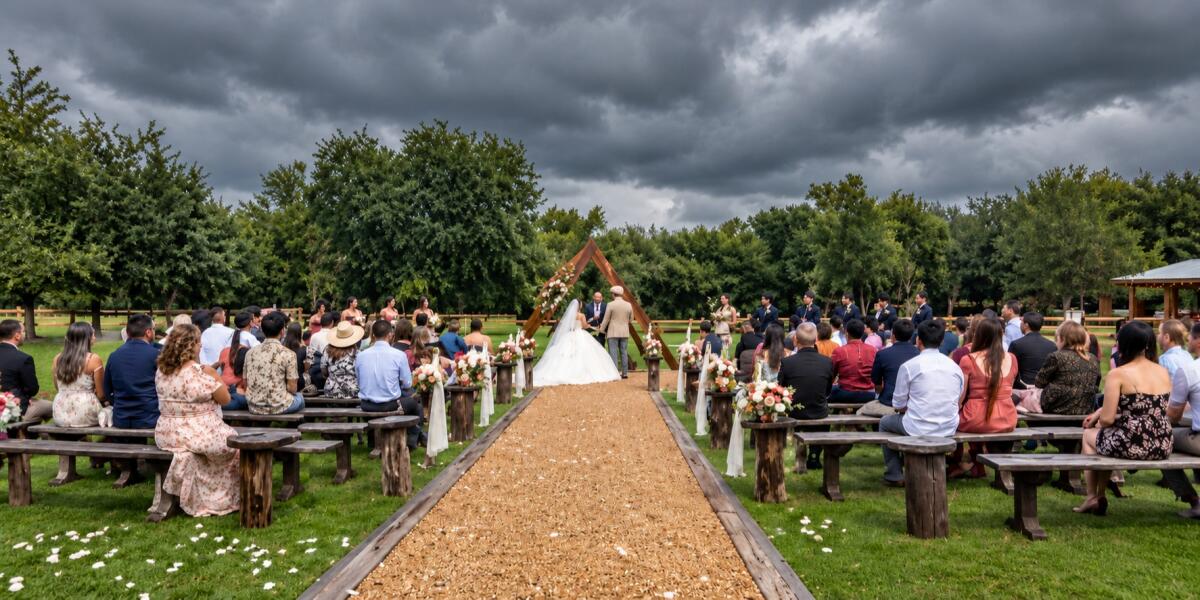
Spring Wedding in North Texas: How to Plan for Rain, Wind and Outdoor Ceremony Changes
Posted By The Dream Ranch Events On 2026-10-10
Spring is a beautiful time to get married in North Texas. Blooming flowers, fresh greenery, and comfortable outdoor settings create a wonderful backdrop for couples who want a romantic countryside wedding. However, spring weather can also be unpredictable, making preparation an important part of the planning process.
Rain, strong winds, sudden temperature changes, and wet ground can affect everything from your ceremony setup to guest comfort and photography. If you are planning an outdoor wedding near Dallas, having a practical weather backup plan can help you enjoy your celebration without unnecessary last-minute stress.
The good news is that preparing for changing weather does not mean giving up on your outdoor wedding vision. With the right venue, a flexible timeline, and clear communication with your vendors, you can create a beautiful celebration that works in different conditions.
In this guide, we explain how to plan a spring wedding in North Texas, prepare for rain and wind, organize an alternative ceremony location, and keep your guests comfortable throughout the day.
1. Understand North Texas Spring Weather Before Choosing Your Wedding Date
Spring weather in North Texas can vary considerably from one day to another. A sunny afternoon can be followed by rain, strong winds, or a sudden temperature drop.
Although no one can predict the exact weather months in advance, understanding the potential conditions can help you make better planning decisions.
Prepare for rain
Rain can affect outdoor seating, ceremony aisles, decorations, photography locations, and guest movement between spaces.
If your wedding is planned for March, April, or May, discuss the venue's rain contingency arrangements before confirming your booking.
Ask whether an indoor ceremony space is available, how quickly the event can be moved, and who will make the final decision if outdoor conditions become unsuitable.
Plan for wind
Wind can affect more than your hairstyle and wedding veil. It can also move lightweight decorations, disturb floral arrangements, affect signage, and make temporary structures unsafe.
Choose decorations that can be secured properly and discuss wind-related restrictions with your venue and vendors.
Avoid assuming that a decorative arch, tent, or outdoor installation will remain safe in every condition. Follow the venue's safety procedures and any applicable weather restrictions.
Consider changing temperatures
Spring afternoons may feel pleasant while evenings become cooler. Guests who are comfortable during the ceremony may need an additional layer later in the reception.
Consider the timing of your ceremony, the duration of outdoor activities, and whether guests will have access to a comfortable indoor area.
Planning tip: Your wedding date should reflect your preferred season, but your venue arrangements should account for the possibility that the weather will not match your expectations.
2. Choose an Outdoor Wedding Venue With a Practical Backup Option
One of the most important decisions when planning a spring wedding is selecting a venue that gives you flexibility.
An outdoor ceremony can be beautiful, but the experience becomes much easier to manage when you have a realistic alternative available.
When comparing outdoor wedding venues near Dallas, look beyond the ceremony backdrop and ask how the property will function if the weather changes.
Ask about indoor ceremony alternatives
Find out whether the venue has an indoor space that can accommodate your ceremony and expected guest count.
Check whether the alternative space can support your preferred seating arrangement, wedding décor, music, and photography requirements.
If the indoor space is smaller than your outdoor ceremony area, ask how the layout would change and whether any adjustments would be necessary.
Confirm how quickly the ceremony can be relocated
A backup location is only useful if it can be prepared in time.
Ask who is responsible for moving chairs, adjusting decorations, communicating changes, and coordinating vendors.
If the indoor alternative requires a complete room reset, establish a realistic transition timeline before the wedding day.
Review venue policies
Confirm whether there are additional charges for moving indoors, changing the layout, extending setup time, or using alternative spaces.
Also ask whether the venue has restrictions concerning tents, outdoor electrical equipment, open flames, or decorations that may be affected by wind.
For couples considering a countryside wedding setting, Dream Ranch Events in Wolfe City, Texas, offers indoor and outdoor event spaces. You can review its venue amenities and event packages when evaluating whether the venue fits your wedding plans.
Be sure to confirm the available spaces, capacities, weather procedures, and any additional requirements directly with the venue.
3. Create a Clear Rain Backup Plan for Your Ceremony
A rain plan should be more specific than simply deciding to move indoors if necessary.
The best approach is to establish the alternative location, decision-making process, setup responsibilities, and communication plan well before the wedding day.
Choose your primary and backup locations
Identify where the ceremony will take place if conditions are favorable and where it will move if the outdoor setup becomes unsuitable.
Think about the entire ceremony experience, including the aisle, seating, altar or arch, musicians, sound equipment, and guest entrances.
If you are planning an outdoor ceremony followed by an indoor reception, consider how guests will move between the two spaces in wet weather.
Establish a decision deadline
Discuss with your wedding planner and venue when the final location decision should normally be made.
The deadline will depend on the venue's setup requirements and the forecast, so there is no single timing rule that works for every wedding.
Make sure everyone understands who has authority to make the decision and how the information will reach the vendors.
If conditions deteriorate unexpectedly, safety should take priority over a previously agreed timeline.
Prepare a relocation checklist
Your rain contingency checklist might include:
- Confirming the indoor ceremony layout.
- Moving or adjusting chairs and ceremony decorations.
- Protecting flowers, signage, and other decorative items.
- Relocating microphones, speakers, and other equipment safely.
- Informing the photographer and officiant.
- Updating the coordinator, caterer, and entertainment team.
- Directing guests to the revised ceremony location.
- Checking that walkways and entrances are safe.
Assign responsibilities to specific people rather than expecting the couple or their families to coordinate everything themselves.
With these arrangements in place, a change of location becomes a manageable adjustment rather than a last-minute emergency.
4. Protect Your Wedding Decorations From Wind
Outdoor weddings often include floral installations, welcome signs, aisle markers, table decorations, and ceremony arches.
Wind can affect these details, particularly when decorations are lightweight or positioned in exposed areas.
Fortunately, you can preserve your wedding aesthetic while making practical choices about setup.
Secure the ceremony arch
If your ceremony includes an arch or floral installation, confirm how it will be anchored and whether the venue permits the structure.
The florist and venue team should ensure that the installation is suitable for the location and conditions.
Do not rely on decorative weight alone to make a structure safe. Follow professional installation guidance and the venue's restrictions.
Choose stable table decorations
Low centerpieces and securely arranged decorative elements can be more practical than tall, lightweight displays in exposed outdoor settings.
If you want candles, hanging decorations, or elaborate floral arrangements, confirm whether they are permitted and how they should be secured.
Keep signage stable
Welcome signs, seating charts, and directional signs should be positioned where guests can see them without creating obstacles.
Use stable display arrangements and avoid placing signs where wind could cause them to fall into walkways.
Discuss wind-sensitive details with vendors
Your florist, decorator, rental company, and photographer can help identify which elements are most likely to be affected by wind.
Review these details during the venue walkthrough rather than waiting until the wedding morning.
The goal is to choose decorations that look beautiful while remaining suitable for the setting.
5. Plan for Wet Ground and Mud Around the Venue
Rain can create challenges even when it stops before the ceremony begins.
Wet grass, muddy pathways, and puddles may affect guest movement, footwear, seating arrangements, and photography.
This is particularly important for countryside venues, where parts of the event may take place on lawns or natural surfaces.
Check the ground conditions
Ask the venue how it assesses outdoor areas after rainfall and whether some locations become unsuitable for seating or walking.
A ceremony space that looks perfect during a dry venue visit may need adjustments after heavy rain.
Review guest walking routes
Consider the route between parking, the ceremony area, restrooms, and reception space.
If guests must walk across wet grass, discuss whether alternative pathways or a different layout would be more appropriate.
Pay particular attention to elderly guests, children, and people who may have difficulty walking on uneven or slippery surfaces.
Give guests practical footwear guidance
If parts of the event will take place on grass, mention this in your wedding information.
Guests can then choose footwear that suits the setting. You may also consider providing a small number of practical footwear accessories if they fit your wedding style.
Protect important equipment
Coordinate with the rental company and other vendors to ensure that furniture, sound equipment, cables, and decorative installations are positioned safely.
Avoid placing electrical equipment in areas exposed to standing water or wet conditions. Any temporary electrical setup should follow appropriate safety requirements.
Planning for ground conditions helps make the venue more comfortable and accessible, even if the weather changes shortly before your ceremony.
6. Adjust Your Wedding Timeline for Changing Weather
Weather contingencies can affect the schedule as well as the location.
For example, a delayed outdoor ceremony may change the timing of photographs, cocktail hour, dinner service, and evening entertainment.
A flexible timeline helps you accommodate these changes without rushing every part of the celebration.
Build in transition time
Allow enough time for guests to move between spaces and for the venue team to make any necessary adjustments.
If your ceremony needs to move indoors, the schedule should account for the setup and communication process.
Avoid planning every activity back-to-back, particularly if several vendors need to coordinate their work.
Discuss photography alternatives
If you have planned outdoor portraits, identify covered or indoor locations that could work as alternatives.
Your photographer can help determine which locations are suitable for family portraits, couple photographs, and wedding-party pictures.
You can also consider taking some photographs before the ceremony to create more flexibility later.
Protect the main events
Identify the parts of the day that matter most to you, such as the ceremony, family photographs, dinner, or speeches.
Work with your coordinator to determine which activities can be adjusted if the schedule changes.
For example, a short delay in outdoor photographs may be easier to accommodate than postponing the entire dinner service.
A well-designed timeline leaves room for unexpected changes while protecting the moments that matter most.
7. Keep Guests Comfortable During Unpredictable Weather
Your guests may be excited about an outdoor spring wedding, but their experience will depend on how comfortably they can participate.
Consider how the weather may affect people of different ages and mobility levels.
Provide shade and hydration
If the weather is warm, consider shaded seating and accessible drinking water.
For longer outdoor ceremonies, make sure guests can wait comfortably before the ceremony begins.
Plan for cooler evenings
If your reception continues outdoors after sunset, consider whether guests may need an additional layer or access to a warmer indoor space.
Check whether the venue permits any heating equipment you intend to use and confirm that it can be operated safely.
Make indoor transitions easy
If the ceremony or reception moves indoors, provide clear directions and ensure guests know where to go.
Designate family members, ushers, or event staff to help direct guests when needed.
Consider elderly guests and children
Provide convenient seating and avoid making guests walk unnecessarily between distant areas.
If the weather becomes severe, follow the venue's safety procedures and move guests to an appropriate safe location.
Guest comfort should be part of your venue and layout planning from the beginning, not an afterthought.
8. Coordinate With Every Wedding Vendor Before the Big Day
A weather backup plan works best when every vendor understands their responsibilities.
If the ceremony location changes, the florist, photographer, officiant, musicians, caterer, rental company, and coordinator may all need to adjust their plans.
Arrange a coordination discussion before the wedding to review how these changes will be managed.
Photographer and videographer
Share your preferred indoor and covered photo locations with your photography team.
Ask how rain, wind, and changes in natural light might affect the photography schedule.
If you have particular photographs in mind, identify alternatives that preserve the style of your wedding.
Florist and decorator
Review which installations can be moved easily and which require additional time or equipment.
Confirm how flowers, signage, and other decorative elements will be protected if the ceremony moves indoors.
Caterer and entertainment team
Ensure the caterer knows where food will be served if the reception layout changes.
Discuss sound equipment, power requirements, speaker placement, and other setup details with your entertainment provider.
Wedding planner and venue coordinator
Establish a clear communication chain for weather-related decisions.
The coordinator should know which vendors need to be contacted, who will communicate with guests, and how the revised schedule will be distributed.
Keep an updated contact list available to the people responsible for managing the event.
Clear communication reduces confusion and allows the couple to focus on enjoying their wedding.
9. Understand When to Move Indoors
It can be disappointing to change an outdoor ceremony plan after spending months designing it.
However, the decision should be based on safety and the venue's assessment of conditions, not simply on whether the original setup looks better.
Consider moving the ceremony indoors when:
- Rain makes the ceremony area or walking routes unsafe.
- Wet ground creates slipping hazards or prevents suitable seating arrangements.
- Strong winds make decorations, temporary structures, or equipment unsafe.
- Lightning or severe weather creates a risk to people outdoors.
- Temperature or other environmental conditions make the event uncomfortable or unsafe.
- The venue's weather policies require the outdoor setup to be discontinued.
Do not wait until the ceremony is about to begin if conditions are already deteriorating.
Follow official weather alerts, the venue's safety procedures, and instructions from qualified event professionals. A tent or covered structure should not automatically be treated as a safe shelter during thunderstorms or dangerous winds.
A successful wedding is not defined by whether every moment happens outdoors. It is defined by how well the celebration accommodates the couple and their guests.
10. Prepare a Spring Wedding Weather Checklist
Use this checklist during your final planning stages to make sure the important details have been addressed.
Venue and backup arrangements
- Confirm the primary outdoor ceremony location.
- Identify an indoor alternative with suitable capacity.
- Review the venue's weather policies and relocation procedures.
- Confirm any additional fees associated with changing locations.
- Check the accessibility and condition of guest walking routes.
- Identify who has authority to make weather-related decisions.
Decorations and equipment
- Confirm that arches, signs, and floral installations can be secured safely.
- Review restrictions on tents, lighting, and temporary equipment.
- Identify decorations that may need to be moved indoors.
- Confirm how audio equipment and electrical connections will be protected.
- Prepare a revised layout for the backup ceremony space.
Vendors and scheduling
- Share the weather plan with every vendor.
- Confirm vendor arrival times and setup responsibilities.
- Build transition time into the event schedule.
- Identify alternative photography locations.
- Prepare a communication plan for schedule or location changes.
Guest comfort
- Provide clear arrival and parking instructions.
- Plan for rain, wet ground, and cooler evening temperatures.
- Consider accessibility for older guests and people with mobility needs.
- Arrange clear signage for indoor transitions.
- Monitor weather conditions and follow safety guidance.
Review the checklist with your venue coordinator or wedding planner a few weeks before the event, then confirm any final changes as the wedding date approaches.
Why Consider Dream Ranch Events for a Spring Wedding in North Texas?
Choosing a spring wedding venue involves finding a setting that matches your vision while giving you practical options when the weather changes.
Dream Ranch Events in Wolfe City, Texas, offers indoor and outdoor event spaces for celebrations in a countryside setting. For couples planning a spring wedding, reviewing the available spaces, amenities, and event packages can help determine whether the venue fits their preferred ceremony and reception arrangements.
Before booking, ask about indoor ceremony capacity, outdoor ground conditions after rain, wind-related restrictions, weather-related relocation procedures, and the responsibilities of the venue team.
You can explore the Dream Ranch Events amenities and event packages to review the available options.
When comparing wedding venues near Dallas, prioritize a venue that can explain its weather contingency procedures clearly and help you understand what will happen if your outdoor plans need to change.
Final Thoughts
A spring wedding in North Texas can be beautiful, but successful outdoor wedding planning requires flexibility.
Rain, wind, and changing temperatures do not have to disrupt your celebration when you prepare for them in advance. Choose a venue with a practical alternative, create a clear relocation plan, coordinate with vendors, and consider how changing conditions may affect your guests.
Most importantly, decide early which parts of your wedding matter most and build a plan that protects those moments.
With thoughtful preparation and a reliable team, you can enjoy the beauty of a spring wedding while feeling more confident about handling the unexpected.
Planning a spring wedding near Dallas? Explore Dream Ranch Events to learn about its event spaces and discuss the arrangements that may suit your ceremony and reception.
Frequently Asked Questions
1. Is spring a good time for an outdoor wedding in North Texas?
Spring can be a beautiful time for an outdoor wedding because of the seasonal greenery and flowers. However, conditions can change, so couples should plan for rain, wind, changing temperatures, and wet ground before confirming their ceremony arrangements.
2. What should an outdoor wedding rain plan include?
A rain plan should identify an alternative ceremony location, a decision-making deadline, setup responsibilities, vendor communication procedures, and a revised event layout. It should also explain how guests will be directed to the alternative location.
3. How do you protect an outdoor wedding ceremony from wind?
Use decorations and installations that can be secured appropriately, discuss restrictions with your venue, and avoid relying on lightweight structures in exposed areas. The venue and qualified vendors should assess whether conditions are safe for outdoor installations.
4. When should you move an outdoor wedding ceremony indoors?
Move indoors when weather conditions make the ceremony unsafe or unsuitable, following the venue's policies and safety guidance. Heavy rain, unsafe ground, dangerous winds, lightning, and severe weather may require a change of location.
5. How can you keep wedding guests comfortable in unpredictable spring weather?
Provide suitable seating, clear walking routes, drinking water, and access to an appropriate indoor area. Communicate footwear and clothing recommendations in advance, and make sure elderly guests and people with mobility limitations can move comfortably between event spaces.
6. What should couples ask a wedding venue about bad-weather arrangements?
Ask whether an indoor alternative is available, whether it can accommodate the guest count, who manages the relocation, how much setup time is required, whether additional fees apply, and what restrictions exist for tents, decorations, and outdoor equipment.
