

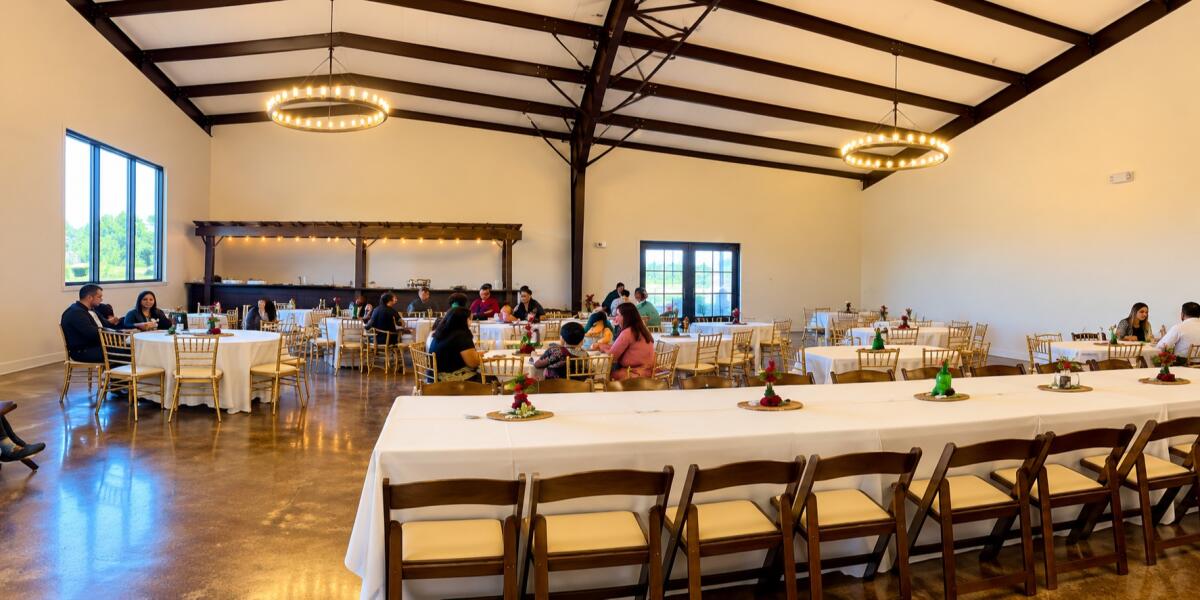
How to Plan a Company Retreat Near Dallas: Venue Layout, Meals, Activities and Team Sessions
Posted By The Dream Ranch Events On 2026-10-08
Planning a company retreat is about more than taking employees away from the office for a day. A well-organized retreat gives teams time to discuss business priorities, solve problems, strengthen working relationships, and develop a clearer direction for the months ahead.
For companies in Dallas and the surrounding North Texas region, a company retreat near Dallas can provide a refreshing change of environment while keeping employees connected to the business.
However, a successful retreat requires careful planning. From choosing the right venue layout to organizing meals, scheduling team sessions, and managing transportation, every detail influences the overall experience.
Whether you are planning a leadership off-site, an annual company gathering, a department retreat, or a full-day employee workshop, this guide explains how to organize a productive and enjoyable company retreat.
1. Define What Your Company Wants to Achieve
Before searching for a venue or planning activities, establish the primary objective of your retreat.
Different business goals require different event formats. A leadership retreat focused on annual planning will need a different agenda from an employee engagement event or a cross-department workshop.
Start by identifying one to three outcomes you want to achieve.
For example:
- Strategic planning: Establish business priorities, review performance, and agree on future goals.
- Team alignment: Help departments understand shared objectives and responsibilities.
- Problem-solving: Identify operational challenges and develop actionable solutions.
- Employee engagement: Create opportunities for employees to connect outside their regular work environment.
- Leadership development: Strengthen decision-making, communication, and collaboration.
- Company culture: Reinforce organizational values and recognize employee contributions.
Once the objectives are clear, decide what success should look like at the end of the retreat.
If the goal is strategic alignment, success might mean agreeing on three quarterly priorities. If the goal is improving collaboration, success might involve identifying specific ways departments can work together more effectively.
Clear outcomes make it easier to plan the agenda, select appropriate activities, and measure the retreat's value.
2. Choose a Company Retreat Venue Near Dallas That Fits Your Agenda
The right venue should support the purpose of your retreat rather than simply look impressive.
When comparing company retreat venues near Dallas, consider the type of work your team will be doing throughout the day.
A conventional conference room may be suitable for presentation-heavy meetings. A countryside venue may be a better fit when the retreat combines business discussions, group activities, shared meals, and informal networking.
Before booking, consider the following factors.
Location and transportation
Think about where your employees will be traveling from. Consider driving times, parking availability, carpooling arrangements, and whether employees will need overnight accommodation.
For teams traveling from multiple locations across Dallas–Fort Worth, provide directions and arrival instructions well in advance.
Indoor and outdoor options
If your agenda includes both focused meetings and outdoor activities, look for a venue that can accommodate both formats.
Indoor areas can support presentations, workshops, and group discussions, while outdoor spaces may offer a more relaxed setting for informal conversations and collaborative exercises.
For outdoor activities, always establish an appropriate indoor alternative in case of unfavorable weather.
Meeting infrastructure
A company retreat still needs to function as a professional business event.
Check whether the venue provides reliable internet, suitable seating, presentation equipment, microphones, power access, and spaces for smaller discussions.
Ask about any additional equipment you need to arrange independently.
Catering and event support
Understand whether the venue provides food, allows outside caterers, or requires you to coordinate catering separately.
Clarify setup responsibilities, cleanup arrangements, event-day support, and any restrictions that could affect your schedule.
For example, Dream Ranch Events in Wolfe City, Texas, offers a countryside setting with multiple indoor and outdoor event spaces. Its event spaces and amenities can be reviewed when evaluating whether the property fits your company's retreat requirements.
The best choice is a venue that supports your agenda, attendee count, budget, and logistical needs.
3. Plan a Venue Layout That Encourages Participation
Venue layout can influence how people communicate, collaborate, and participate in a retreat.
A room arranged for presentations may not be ideal for brainstorming. Similarly, a layout designed for dining may not provide enough space for workshops or team exercises.
Instead of using the same arrangement throughout the day, plan the space around the activities on your agenda.
Presentation and leadership sessions
Theater-style seating can work well for opening remarks, company updates, and presentations where attendees primarily listen.
For leadership discussions, a boardroom-style arrangement may encourage direct conversation and decision-making.
Collaborative workshops
Round tables or small-group seating can help employees participate in discussions and work through problems together.
If your retreat includes breakout sessions, make sure teams have enough room to talk without disturbing other groups.
Meals and networking
Dining tables arranged to encourage conversation can make meals more engaging.
Consider mixing employees from different departments rather than seating everyone with their immediate colleagues.
Outdoor sessions
Outdoor spaces can be useful for informal discussions, small-group exercises, and reflection sessions.
Before scheduling outdoor work, check seating availability, shade, weather conditions, accessibility, and noise levels.
Plan transitions between activities
Avoid layouts that require extensive furniture movement between every session.
If a major room reset is necessary, schedule enough time for the venue team or event organizers to complete it.
A practical layout plan makes the day easier to manage and helps employees move comfortably between activities.
4. Create a Realistic Company Retreat Agenda
One of the biggest mistakes in retreat planning is trying to fit too many activities into a single day.
A productive retreat should balance focused work, breaks, meals, collaboration, and informal conversation.
Here is an example of a full-day company retreat schedule.
Time | Activity | Objective |
9:00 AM | Arrival and breakfast | Welcome employees and encourage informal conversation |
9:30 AM | Opening session | Explain the retreat's goals and expected outcomes |
10:00 AM | Business strategy workshop | Discuss priorities and key challenges |
11:15 AM | Coffee break | Allow employees to recharge |
11:30 AM | Department breakout sessions | Develop ideas and solutions |
12:30 PM | Lunch | Encourage cross-team conversations |
1:30 PM | Collaborative team activity | Strengthen communication and problem-solving |
2:30 PM | Group presentations | Share recommendations and identify common themes |
3:15 PM | Afternoon break | Provide time to relax |
3:30 PM | Action-planning session | Assign responsibilities and next steps |
4:15 PM | Closing discussion | Summarize decisions and key takeaways |
4:45 PM | Informal networking and departure preparation | End the retreat on a relaxed note |
Adapt the schedule to your team's size, travel arrangements, and business objectives.
For a leadership retreat, you may want to dedicate more time to strategic discussions. For an employee engagement retreat, you might allocate more time to collaborative activities and informal interaction.
Build flexibility into the agenda so that useful discussions do not have to be interrupted unnecessarily.
5. Design Team Sessions Around Real Business Challenges
Team sessions are most valuable when they produce something employees can apply after the retreat.
Rather than filling the schedule with generic icebreakers, select activities that connect to your company's current priorities.
Cross-department problem-solving
Divide employees into small groups containing people from different departments.
Give each group a real operational challenge, such as improving customer communication, reducing delays, or simplifying an internal process.
Ask each group to identify the problem, propose a solution, and explain how success could be measured.
Quarterly priority workshop
Ask each team to identify its most important priorities for the next quarter.
Then bring everyone together to identify dependencies, overlapping responsibilities, and potential conflicts.
This can help departments understand how their work contributes to broader company objectives.
Lessons-learned session
Invite teams to discuss what worked well during the previous quarter and what could be improved.
Keep the discussion constructive by focusing on processes, communication, and opportunities rather than assigning blame.
Team communication exercise
Create a collaborative task that requires employees to share information, coordinate responsibilities, and make decisions together.
After the exercise, discuss which behaviors helped the group succeed and how those lessons relate to everyday work.
Leadership discussion
For management retreats, consider discussing decision-making, delegation, employee development, and communication between departments.
Keep the group focused on a few important questions instead of trying to solve every organizational challenge in one session.
The goal is to make the retreat useful, relevant, and actionable.
6. Organize Meals That Support the Retreat Schedule
Food is an important part of the employee experience, but meal planning should also support the event's timing and objectives.
A poorly timed meal can disrupt the agenda, while an overly short break can leave employees feeling rushed.
Start by estimating the number of attendees and collecting dietary requirements before confirming catering.
Breakfast and arrival refreshments
For morning retreats, consider coffee, tea, water, fruit, pastries, and other convenient breakfast options.
Allow enough time for employees to arrive, collect refreshments, and settle in before the first session begins.
Lunch
Choose a lunch format that suits your group size and available space.
Buffet service may offer flexibility for larger groups, while individually served meals can provide a more structured experience.
Allow sufficient time for guests to collect food, eat, and socialize.
Afternoon refreshments
A short afternoon break can help employees recharge before the final workshop or action-planning session.
Provide water and refreshments, especially if the retreat includes outdoor activities.
Dietary needs and accessibility
Ask attendees about allergies, vegetarian preferences, religious dietary requirements, and other relevant needs.
Communicate these requirements to the caterer well in advance.
Shared meals as networking opportunities
Consider seating arrangements that encourage employees to interact with colleagues outside their usual teams.
Keep the atmosphere relaxed rather than turning every meal into a formal working session.
Before confirming catering, verify kitchen access, serving arrangements, cleanup responsibilities, and any venue-specific food policies.
7. Incorporate Breaks and Informal Networking
A company retreat should not feel like an ordinary workday with a different background.
Although structured sessions are important, employees also benefit from time to reflect, talk, and connect informally.
Schedule short breaks between demanding sessions and leave some unstructured time in the day.
Depending on the venue and group, this might include:
- Informal outdoor conversations.
- Coffee and networking breaks.
- Relaxed group lunches.
- Short walks or quiet reflection time.
- Optional lawn games or low-pressure activities.
Avoid making every break mandatory or turning every interaction into a team-building exercise.
A comfortable environment gives employees the freedom to connect naturally, which can be particularly valuable for hybrid teams or departments that rarely interact in person.
8. Prepare a Practical Retreat Budget
A clear budget helps prevent last-minute surprises and makes it easier to compare venues.
Your total budget should account for more than the venue rental.
Include the following categories:
Venue and facilities
- Venue rental and any additional space charges.
- Tables, chairs, staging, and layout requirements.
- Setup, teardown, and event support.
Food and beverages
- Breakfast, lunch, refreshments, and dinner if required.
- Catering staff, service charges, and applicable taxes.
- Dietary accommodations.
Technology and materials
- Audio-visual equipment and presentation support.
- Internet requirements.
- Workshop materials, signage, and printing.
Transportation and accommodation
- Parking, shuttle services, or other transport.
- Hotel rooms for employees traveling from outside the area.
- Any additional overnight arrangements.
Activities and contingency
- Facilitators or external trainers.
- Activity supplies and equipment.
- Weather backup arrangements.
- A contingency allowance for unexpected expenses.
Request itemized proposals from venues and suppliers. Confirm which services are included, which cost extra, and what happens if your schedule or attendee count changes.
A realistic budget allows you to prioritize the elements that contribute most to the retreat's objectives.
9. Communicate the Details Before the Event
Even a well-planned retreat can become stressful if employees do not know where to go or what to expect.
Send an event brief in advance that includes:
- Date, location, and directions.
- Arrival time and expected departure time.
- Parking and transportation instructions.
- A high-level agenda.
- Clothing recommendations, particularly for outdoor activities.
- Meal arrangements and a way to communicate dietary needs.
- Items employees should bring.
- A contact person for event-day questions.
For a retreat involving workshops, explain whether employees should prepare reports, review documents, or bring ideas for discussion.
Share only the preparation that is genuinely necessary. The goal is to help attendees arrive ready to participate without creating unnecessary work before the event.
10. Turn Retreat Discussions Into Action
A company retreat should not end when employees leave the venue.
Without follow-up, valuable discussions can quickly disappear into everyday work.
Before the closing session, document the most important decisions and assign clear next steps.
For each action item, identify:
- What needs to happen.
- Who is responsible.
- When it should be completed.
- How progress will be measured.
Within a few business days, share a summary of decisions, responsibilities, and agreed priorities with attendees.
Consider scheduling a follow-up meeting two to four weeks later to review progress and identify any obstacles.
You can also send a short feedback survey asking employees what they found useful, what could be improved, and which topics deserve further discussion.
These steps help turn a company retreat into a practical investment in team alignment and organizational progress.
Why Consider Dream Ranch Events for Your Company Retreat?
Choosing a company retreat venue near Dallas involves balancing business requirements with the experience you want employees to have.
A countryside setting can provide a change of pace for teams that want to combine structured meetings, shared meals, collaborative sessions, and informal networking in one location.
Dream Ranch Events, located in Wolfe City, Texas, offers multiple indoor and outdoor event spaces for gatherings of different sizes. Its amenities include seating and tables, internet access, a portable speaker system with a microphone, indoor and outdoor lighting, and event-day venue support.
These features may be useful for companies planning workshops, presentations, team gatherings, or employee appreciation events. Specific requirements, room configurations, catering arrangements, and availability should be confirmed directly with the venue.
Explore the Dream Ranch Events amenities and event packages to understand the available options.
If you are comparing company retreat venues near Dallas, consider whether Dream Ranch's setting and facilities align with your attendee count, planned activities, and budget.
Final Thoughts
Planning a successful company retreat requires more than booking a venue and arranging a few activities.
Start with clear objectives, choose a venue that supports your agenda, organize the layout around the work being done, and create a schedule that balances focused sessions with meals and informal interaction.
Most importantly, make sure the retreat produces outcomes that employees can carry back into their everyday work.
With thoughtful planning, a company retreat near Dallas can become an opportunity to strengthen team relationships, improve communication, align business priorities, and prepare your organization for what comes next.
Planning your next company retreat? Explore Dream Ranch Events to learn more about its event spaces and discuss the requirements for your corporate gathering.
Frequently Asked Questions
1. How do you plan a company retreat near Dallas?
Start by defining your objectives, estimating attendance, establishing a budget, and selecting a suitable venue. Then organize the meeting layout, catering, team sessions, transportation, and event schedule. Finish by assigning action items and arranging follow-up after the retreat.
2. What should a company retreat agenda include?
A full-day agenda may include arrival refreshments, opening remarks, strategy sessions, department workshops, breaks, lunch, collaborative activities, action planning, and closing remarks. The exact schedule should reflect your business objectives and the time available.
3. How much does a company retreat near Dallas cost?
The cost depends on the venue, number of attendees, event duration, catering, technology, transportation, accommodation, and activities. Request itemized quotes from venues and suppliers so you can compare the total cost rather than the rental fee alone.
4. What is the ideal duration for a company retreat?
A half-day retreat may be sufficient for a focused workshop or department meeting. A full-day retreat allows more time for strategy, collaboration, and informal interaction. Multi-day retreats may be more appropriate for complex planning sessions or teams traveling from different locations.
5. How can you make a company retreat productive?
Set measurable objectives, limit the number of major topics, encourage participation, document decisions, and assign clear responsibilities. Following up on action items after the event helps ensure the retreat leads to meaningful progress.
6. What should you look for in a company retreat venue?
Consider location, attendee capacity, indoor and outdoor options, meeting layouts, internet, presentation equipment, catering, parking, accessibility, event support, and weather contingencies. Confirm that the venue can accommodate your planned activities and schedule before booking.
