

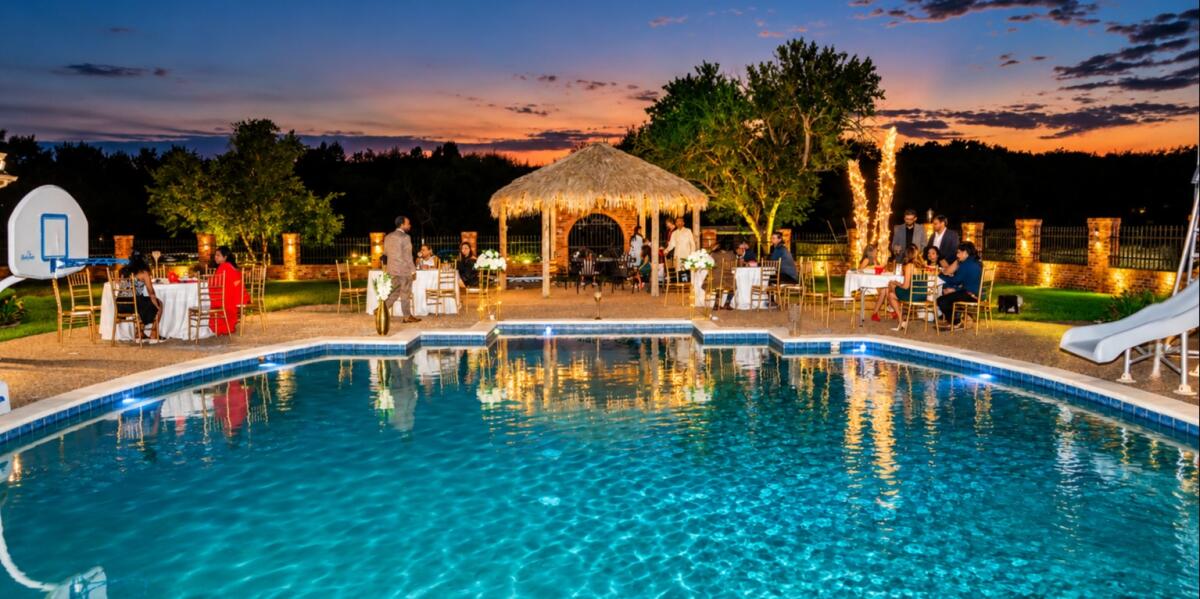
How to Choose the Right Corporate Event Venue in Dallas-Fort Worth
Posted By The Dream Ranch Events On 2026-09-28
Choosing a corporate event venue in Dallas-Fort Worth is about more than finding a room that looks impressive in photos.
The right venue has to work for the people attending, the agenda you have planned, the technology you need, the vendors you are bringing in, and the budget your company has approved. A venue that seems affordable at first can become expensive once you add AV, catering, transportation, overtime, staffing, setup fees, and other event-day requirements.
DFW also presents a unique planning challenge: it is a large, spread-out region with multiple business hubs, airports, highways, suburban centers, and destination-style venues. That means a location that looks convenient on a map may not be convenient for your attendees.
Whether you are planning a leadership retreat, employee appreciation event, sales kickoff, training day, client gathering, product launch, or company celebration, the best approach is to evaluate the venue against your actual event requirements.
Here is how to do it.
1. Start With the Purpose of the Event
Before comparing venues, define what the event needs to accomplish.
A leadership off-site has very different requirements from a 200-person employee celebration. A sales kickoff may need a stage, presentation screens, breakout rooms, and strong Wi-Fi, while a client networking event may place more emphasis on atmosphere, food service, parking, and conversation areas.
Start by answering:
- What is the primary purpose of the event?
- How many people are expected?
- Is attendance mandatory, optional, or invitation-only?
- Will guests be seated, standing, or moving between spaces?
- How long will the event last?
- Will there be presentations or speakers?
- Do you need breakout rooms?
- Will food and beverages be served?
- Will employees or guests travel overnight?
- Will the event include outdoor activities?
- Will people participate remotely?
- Are there accessibility, dietary, or mobility requirements?
These answers give you a venue brief before you begin requesting proposals.
Think beyond the guest count
A venue's advertised maximum capacity is not necessarily its useful capacity for your event.
For example, a room that can technically hold 250 people may not comfortably accommodate 250 attendees if you also need a stage, registration area, buffet, presentation equipment, sponsor displays, networking space, and accessible circulation.
Ask venues for capacity by setup, not simply their maximum occupancy.
For a corporate event, request capacities for:
- Theater seating
- Classroom seating
- Banquet rounds
- Boardroom or conference tables
- Reception/standing arrangements
- Stage and presentation configurations
- Breakout areas
This gives you a much more realistic comparison.
2. Choose the Location Based on Your Attendees
One of the most important rules when selecting a corporate event venue in Dallas-Fort Worth is simple:
Choose the location based on where your attendees are coming from—not only where your office is located.
DFW is not one compact business district. Attendees may be traveling from Dallas, Fort Worth, Plano, Frisco, Irving, Arlington, Grapevine, Las Colinas, Richardson, Denton, or communities farther outside the central business areas.
For a local employee event, a venue that requires a long cross-metro drive can create unnecessary friction.
For a national meeting, the equation changes. Airport access, hotel availability, transportation, and the number of nights attendees need to stay may become more important than being close to a particular corporate office.
Dallas Love Field is approximately seven miles from downtown Dallas and connects directly to major roads including I-35, the Dallas North Tollway, and US-75. DFW International Airport has access from SH 183, SH 114, and I-635, with International Parkway providing access throughout the airport.
That makes airport access worth evaluating—but do not stop at measuring miles.
Ask these location questions
- How long will the average attendee actually drive?
- Which highways will most guests use?
- Is the venue easy to find after leaving the highway?
- Is there enough parking?
- Is rideshare practical at this location?
- Will a shuttle be necessary?
- Can charter buses or motor coaches access the property?
- Are nearby hotels available?
- How long will airport-to-venue transfers take?
- Will guests need to travel between multiple event locations?
For a destination-style venue outside the urban core, the experience can be excellent—but transportation needs to be part of the plan from the beginning.
3. Compare Venue Types Before Comparing Individual Venues
There is no single "best" type of corporate event venue.
The right choice depends on the experience you are trying to create.
Hotels
Hotels can be convenient for conferences, training programs, and multi-day meetings because meeting rooms, guest rooms, food service, and business amenities may be located in one property.
They can be particularly useful when a large portion of your attendees are flying into DFW.
Conference centers
Conference centers are designed around meetings and presentations. They can make sense for training, educational programs, conferences, and events with multiple breakout sessions.
Restaurants and private dining venues
Restaurants can work well for executive dinners, client events, awards dinners, and smaller networking gatherings where food and atmosphere are central to the experience.
Unique or outdoor venues
Ranches, gardens, museums, historic properties, and other nontraditional spaces can give employee celebrations, retreats, client experiences, and brand events a distinct setting.
The tradeoff is that you may need to investigate infrastructure more carefully, particularly transportation, weather backup, power, Wi-Fi, AV, and vendor access.
Dream Ranch, for example, combines a 36-acre ranch setting with several distinct event spaces, including an indoor barn and outdoor areas. Its website lists corporate gatherings among the events it accommodates, with spaces serving groups ranging from smaller gatherings to larger events.
The important question is not whether a venue is traditional or unique. It is whether the venue's format supports the event you are actually trying to run.
4. Evaluate the Layout, Not Just the Square Footage
Corporate events often involve several activities happening in sequence—or simultaneously.
Your venue may need to accommodate:
- Guest arrival
- Registration
- Networking
- General session
- Meals
- Breakout sessions
- Exhibits or displays
- Entertainment
- Closing remarks
- Departure
Walk through the event as an attendee would.
Where do guests enter?
Where do they register?
Where do they get coffee?
Can they easily find the restrooms?
Where will the presentation happen?
Can people move from the general session to lunch without creating a bottleneck?
Where will vendors unload?
Where will staff store supplies?
These practical questions can reveal problems that photographs and floor plans do not.
5. Look at the Total Event Cost—Not Just the Venue Rental
A low venue rental fee does not necessarily mean a low-cost event.
When comparing proposals, create a total-event-cost worksheet.
Include:
Cost category | Questions to ask |
Venue rental | What hours are included? |
Setup and teardown | Are setup hours charged separately? |
Catering | What is included per person? |
Service charges | Are gratuity or administrative fees added? |
AV | Is equipment included or rented separately? |
Wi-Fi | Is business-grade connectivity included? |
Staffing | Are venue staff included? |
Security | Is security required? |
Cleaning | Is post-event cleanup included? |
Furniture | Are tables and chairs included? |
Parking | Is parking free or charged? |
Outside vendors | Are there vendor fees or restrictions? |
Overtime | What happens if the event runs late? |
Cancellation | What are the cancellation terms? |
Insurance | What coverage is required? |
Always request an itemized proposal.
Two venues with similar headline rental prices can have very different final invoices.
6. Ask Specific Questions About AV and Technology
Technology can make or break a corporate event.
Do not simply ask, "Does the venue have Wi-Fi?"
Ask what the infrastructure can realistically support.
For example:
- What internet service is available?
- Is the connection shared or dedicated?
- What bandwidth is available?
- Where are network access points located?
- Is hardwired internet available?
- Are microphones included?
- Is a sound system available?
- Are speakers included?
- Can the venue support multiple displays?
- Is there a stage?
- Are power outlets conveniently located?
- Who operates the AV equipment?
- Can outside AV companies be used?
- Is live streaming supported?
- Can the venue support hybrid meetings?
- What happens if internet service fails?
If your event includes a CEO presentation, product demonstration, sales presentation, livestream, or remote executive, treat technology as an operational requirement rather than an amenity.
Dream Ranch, for example, lists high-speed internet access, indoor and outdoor lighting, a portable speaker system with microphone, and a movable stage among its amenities.
Even when a venue provides equipment, confirm that it matches your actual production requirements.
7. Check Catering and Vendor Flexibility
Food service is another area where venue policies can dramatically affect the final cost.
Before signing, ask:
- Can you select your own caterer?
- Does the venue require preferred vendors?
- Is there a kitchen or prep area?
- Where does catering load in?
- How much refrigerator or storage space is available?
- Are outside beverages permitted?
- Are bartending services available?
- Are there corkage or service fees?
- What are the food-service timelines?
- Can dietary requirements be accommodated?
- Are there restrictions on food trucks or specialty vendors?
Dream Ranch states that clients can choose their own vendors subject to applicable requirements, while security must be provided through the venue's preferred security arrangement.
That kind of flexibility can be useful for companies that already have preferred caterers, planners, production teams, or entertainment vendors.
8. Treat Accessibility as a Core Requirement
Accessibility should not be an afterthought or something you check only after choosing a venue.
Evaluate:
- Accessible parking
- Step-free entrances
- Accessible restrooms
- Accessible seating locations
- Pathways between event areas
- Elevator access where applicable
- Space for mobility devices
- Signage
- Lighting
- Acoustics
- Dietary accommodations
- Quiet or lower-stimulation areas where appropriate
Also ask whether an outdoor venue has accessible routes across the areas guests will actually use.
Dream Ranch lists ADA-compatible restrooms among its amenities.
Still, planners should verify accessibility against the specific event layout rather than relying solely on a general venue statement.
9. Plan for DFW Weather—Especially for Outdoor Events
A beautiful outdoor venue needs a serious weather plan.
North Texas can experience significant heat, thunderstorms, high winds, lightning, and other weather hazards. The National Weather Service specifically recommends that outdoor event plans address potential hazards, sheltering or evacuation options, communication procedures, and the time required to move attendees to safety.
For an outdoor corporate event, ask:
- What is the indoor backup location?
- How quickly can the event move indoors?
- Is there enough indoor capacity for all attendees?
- Who makes the weather decision?
- How are attendees notified?
- What happens to outdoor AV equipment?
- What happens to catering?
- Are tents available or permitted?
- Is there sufficient shade?
- Is air conditioning available nearby?
- What happens if severe weather occurs during setup?
Heat also deserves attention. The National Weather Service's Fort Worth office has specific guidance for North Texas heat conditions, including planning around extreme heat and providing access to cooled spaces.
If your event is outdoors, a weather contingency should be part of the venue comparison—not an afterthought.
10. Build an Airport and Overnight Accommodation Checklist
For national companies bringing employees or clients into DFW, venue selection becomes a travel-management decision as well.
Before choosing a venue, determine:
Airport access
- Which airport will most attendees use?
- Is the venue practical from DFW International Airport?
- Is it practical from Dallas Love Field?
- How will guests get from the airport to the venue?
- Will you arrange shuttles?
- Are rideshare services practical?
- Will transportation be needed between the hotel and venue?
Hotel accommodation
- How many rooms are required?
- Are there suitable hotels nearby?
- Can the hotel provide a room block?
- What are the room-block cutoff dates?
- Are meeting rooms available at the hotel?
- Will attendees need one or multiple nights?
- Can transportation operate efficiently between hotel and venue?
Dallas' meeting infrastructure includes a large hotel inventory and access to both major airports, but the actual convenience depends heavily on where your chosen venue sits within the broader metroplex.
For a multi-day program, calculate the transportation plan before signing the venue contract.
11. Consider the Venue's Operational Infrastructure
A venue can look excellent to an attendee while being difficult for the event team.
Ask about the behind-the-scenes logistics.
Load-in
- When can vendors arrive?
- Is there a dedicated loading area?
- Can production trucks access the property?
- Are there stairs or narrow corridors?
- Is a freight elevator available?
- How long is the load-in window?
Staffing
- Who is the venue contact on event day?
- Is someone available throughout the event?
- Who handles emergencies?
- Who resets rooms between sessions?
- Who manages venue access?
Security
- Is security required?
- Who provides it?
- Are there special requirements for VIPs?
- What are the rules for alcohol service or late-night events?
Cleanup
- What is included?
- What must the event team handle?
- Are cleaning staff available during the event?
- Is there an additional cleaning fee?
These details matter particularly for enterprise events and agencies managing several suppliers.
12. Tour the Shortlisted Venues at the Same Time of Day as Your Event
Photos are useful for creating a shortlist. They are not enough for making the final decision.
Schedule site visits.
If your event starts at 8:00 a.m., try to visit around that time.
If it ends late at night, understand what the property feels like after dark.
During the tour, walk the exact attendee journey:
Parking → entrance → registration → meeting room → food service → breakout → restrooms → exit.
Then walk the vendor journey:
Loading area → storage → prep space → production area → event space.
This often reveals practical issues that do not appear on a venue website.
13. Use a Venue Scorecard Before Making the Final Decision
Once you have three or four realistic options, put the information into a consistent scorecard.
Instead of relying on impressions, compare each venue against the requirements that matter to your event.
Suggested categories include:
- Location and attendee travel
- Capacity and room layout
- Total estimated cost
- AV and Wi-Fi
- Catering
- Parking
- Accessibility
- Hotel availability
- Outdoor/weather contingency
- Vendor flexibility
- Load-in and production
- Staffing
- Contract terms
- Cancellation policy
- Overall operational fit
The goal is not to find the venue with the most features.
It is to identify the venue with the fewest significant compromises for your specific event.
A Practical Corporate Venue RFP Template
Before requesting proposals, send each venue the same basic information.
Event:
Type of corporate event and objective
Date:
Preferred date plus acceptable alternatives
Attendance:
Expected, minimum, and maximum guest counts
Schedule:
Arrival, setup, event start, event end, teardown
Room requirements:
General session, breakouts, dining, networking, exhibits, stage
Technology:
Screens, microphones, Wi-Fi, livestreaming, presentations, power
Food and beverage:
Breakfast, lunch, dinner, breaks, reception, dietary requirements
Vendors:
Catering, AV, entertainment, décor, security, transportation
Transportation:
Parking, shuttles, rideshare, motor coach access
Accommodation:
Number of guest rooms and preferred room-block dates
Accessibility:
Mobility, dietary, sensory, or other attendee requirements
Budget:
Target range or maximum approved spend
Proposal requirements:
Itemized pricing, inclusions, exclusions, service fees, taxes, overtime, cancellation terms, and payment schedule
Sending the same RFP to every shortlisted venue makes the comparison much more meaningful.
Why a Destination-Style Venue Can Make Sense for Corporate Events
Not every corporate gathering needs a hotel ballroom.
For employee retreats, leadership gatherings, team-building events, client experiences, and company celebrations, a destination-style property can create a different atmosphere from a conventional meeting room.
Dream Ranch offers several distinct event spaces across its 36-acre property, including The Elegance, The Avenue, The Grove, Sunshine, and Unwind. Its amenities also include tables and chairs, a movable stage, internet access, a kitchen prep area, parking, and a three-bedroom on-site countryside home.
That combination can be worth considering when the objective is not simply to hold a meeting, but to create a more relaxed corporate experience.
The important step is to determine whether the property works operationally for your attendee count, agenda, transportation plan, technology requirements, and weather contingency.
You can explore the different spaces on the [Dream Ranch event spaces page]Dream Ranch event spaces and compare them against your event requirements.
Final Checklist: Before You Sign a Corporate Venue Contract
Before committing to a DFW corporate event venue, confirm all of the following in writing:
- Event date and hours
- Setup and teardown access
- Maximum capacity for your actual room setup
- Room layouts
- Venue rental fee
- Taxes and service charges
- Catering costs
- AV and technology costs
- Wi-Fi specifications
- Staffing requirements
- Security requirements
- Parking arrangements
- Accessibility
- Vendor restrictions
- Load-in and load-out procedures
- Insurance requirements
- Overtime charges
- Cancellation terms
- Payment schedule
- Weather backup plan
- Hotel and transportation arrangements
- Final attendee capacity
- Day-of-event contact
Choosing a Corporate Event Venue in DFW: The Bottom Line
The right corporate event venue in Dallas-Fort Worth is not necessarily the biggest, newest, or most visually impressive property.
It is the venue that works when you consider the entire event.
Start with your objectives. Then look at attendee travel, capacity, layout, total cost, technology, catering, accessibility, parking, vendor policies, weather planning, and operational logistics.
For local companies, that may mean prioritizing commute times and parking. For national companies, airport access and hotel blocks may carry more weight. For enterprise events, production infrastructure and breakout space can be critical. For employee retreats or client experiences, a distinctive setting may matter more than proximity to a convention center.
The best way to know whether a venue will work is to move beyond the brochure: request an itemized proposal, tour the property, walk through the attendee experience, and ask detailed operational questions before signing.
If you are considering a corporate gathering at a destination-style DFW property, you can Explore Dream Ranch's event spaces or Contact Dream Ranch to discuss your event requirements and venue availability.
For more information about the property, amenities, and event options, visit Dream Ranch Events.
Frequently Asked Questions
What should I consider when choosing a corporate event venue in Dallas-Fort Worth?
Start with event purpose, guest count, room setup, attendee travel, total cost, AV requirements, catering, parking, accessibility, vendor policies, and weather contingency. The venue should support the way your event will actually operate rather than simply meeting the advertised capacity.
Should I choose a venue near DFW Airport?
Not necessarily. Airport proximity can be valuable for national or international attendees, but local employee events may be better served by a location that reduces commute times for the majority of the group. Compare the actual travel requirements of your attendees before making the decision.
How early should I book a corporate event venue in DFW?
The appropriate lead time depends on event size, date, season, venue type, and production requirements. Larger conferences, holiday events, and events requiring room blocks or extensive AV production generally benefit from earlier planning.
What should be included in a corporate event venue proposal?
Request an itemized proposal covering venue rental, event hours, setup and teardown, furniture, catering, AV, Wi-Fi, staffing, security, cleaning, parking, vendor fees, taxes, service charges, overtime, cancellation terms, and payment requirements.
What should I ask an outdoor corporate event venue about weather?
Ask for the property's indoor backup plan, capacity of the backup space, decision-making process, communication procedures, shelter options, and policies for moving catering, AV, furniture, and attendees if severe weather develops.
Is a unique venue suitable for a corporate event?
It can be, particularly for retreats, employee events, client gatherings, networking events, and experiences where the environment is part of the objective. The key is to verify that the venue can support corporate requirements such as reliable internet, AV, power, seating, catering, accessibility, parking, and event-day staffing.
What is the most important question to ask a corporate event venue?
Ask: "What will our total event cost be, and exactly what is included?"
Then request the answer in writing.
A clear proposal makes it much easier to compare venues and avoid surprises after the contract is signed.
